Backyard Science: Sink or Float Testing
Welcome back to Backyard Science Activities!
A series designed to help families explore simple science using everyday items at home.

This simple experiment helps children explore density, buoyancy and prediction skills using everyday household objects.
What You’ll Need:
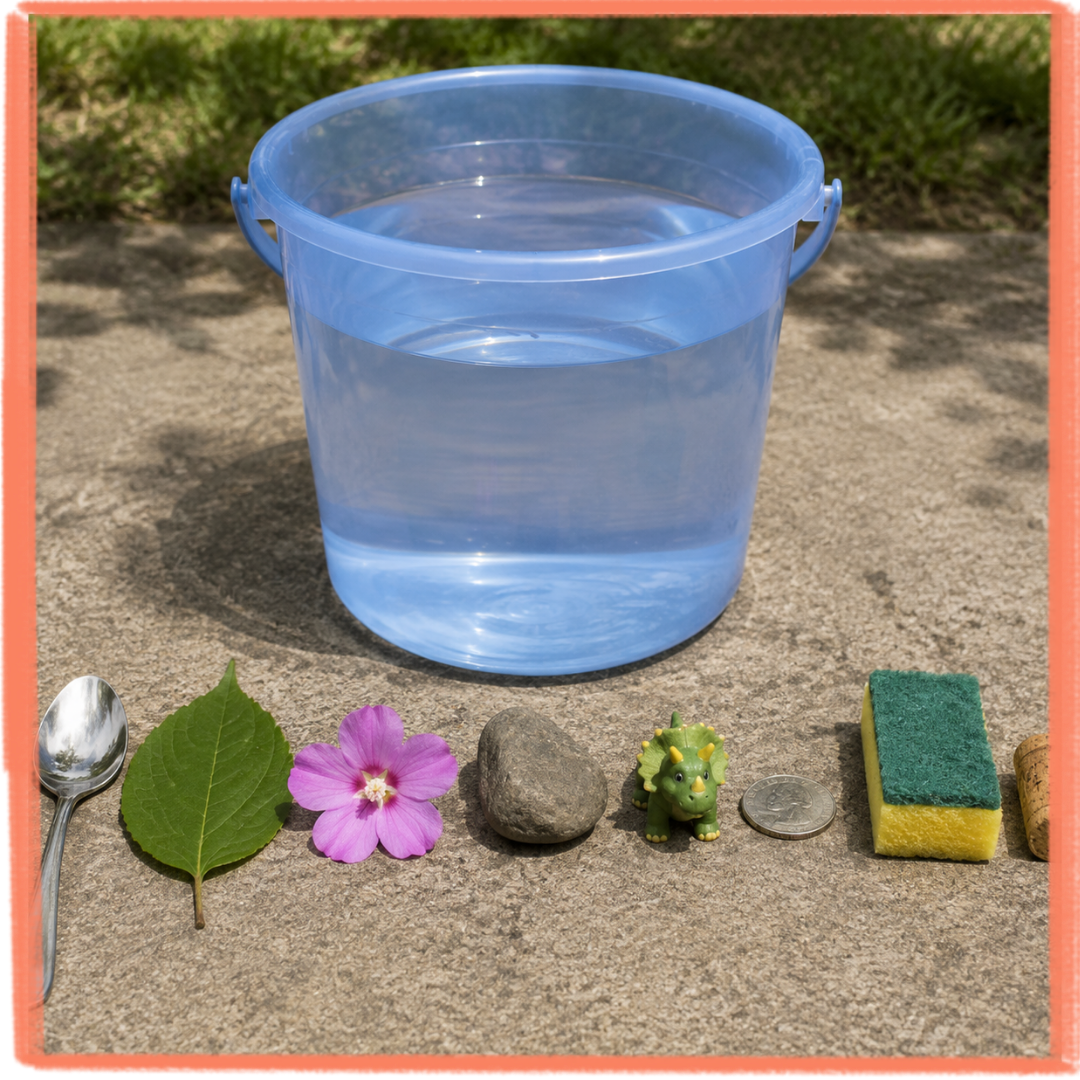
A container (bucket, tub, or large bowl)
Water
A variety of small household items (e.g. spoon, leaf, rock, toy, coin, sponge, cork)
Paper and pencil (optional, for recording predictions)
What to Do:
Fill the container around 2/3 of the way full with water.
Gather a range of objects from around the house or backyard.
Ask your child to predict whether each item will sink or float.
Gently place each item in the water one at a time.
Talk about the results as you go.
The Science Behind the Test
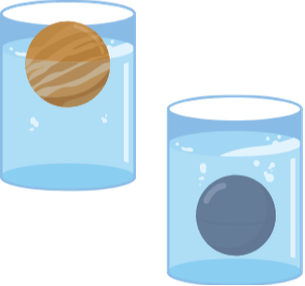
This introduces the concept of density and how it affects buoyancy (objects sink or float depending on their density). Density refers to how tightly packed the molecules inside an object are. If an object is denser than water, it will sink. If it is less dense than water, it will float.
Size doesn't always determine whether something floats. For example, a heavy wooden log or a massive cruise ship floats, while a tiny metal coin sinks

Extend the Learning:
Younger children:
Focus on guessing and observing outcomes.
Older children:
Group items and discuss why some float and others sink.
Discuss why some materials behave differently.
Challenge Ideas:
Can you design a floating object using foil or paper?
Take a flat piece of foil and drop it in, it might float. Then, crumple it into a tight ball and watch it sink! Change its shape into a little boat and see how many marbles you can place inside before it sinks.
Are there certain fruits that float and others that sink? Test whole fruits to see what happens!
Dissolve salt into your water and test your objects again. The salt makes the water denser, causing some items that normally sink to float.