Backyard Science: Baking Soda & Vinegar Volcano
Science doesn’t have to mean lab coats, complicated equipment, or expensive kits. In fact, some of the best science learning happens right at home (especially in the backyard).
With a few basic household items (and a bit of curiosity), children can explore big scientific ideas like chemical reactions, forces, weather patterns, and ecosystems.
This series is designed to make science simple, fun, and accessible for families of all ages. Each activity uses low-cost materials and focuses on hands-on learning that encourages observation, questioning, and discovery.
You can complete these activities with siblings of different ages too, just adjust the level of questioning and involvement.
Let’s get started!

This classic experiment is a fun way to explore chemical reactions using simple kitchen ingredients.
What You’ll Need:
Baking soda
White vinegar
Dishwashing liquid (optional, creates a thicker, more realistic foam)
Red food coloring or washable paint (optional, for the "lava" effect)
An empty plastic bottle or small plastic cup
Building materials (optional, use sand, dirt, playdough, or papier-mâché to shape the volcano)
A tray or outdoor space
What to Do:
Place the bottle on a tray or in the grass.
Place your plastic bottle or cup in the center of the tray or outdoor space
Use the building materials you have selected to shape your volcano around the plastic bottle or cup and ensure you keep the top opening clear (optional)
Pour 2 to 4 tablespoons of baking soda into the bottle.
Add a squirt of dishwashing liquid (optional).
Add a few drops of food red colouring (optional).
Measure out roughly 1 cup of vinegar. Quickly pour the vinegar into the bottle, then stand back and watch it erupt!
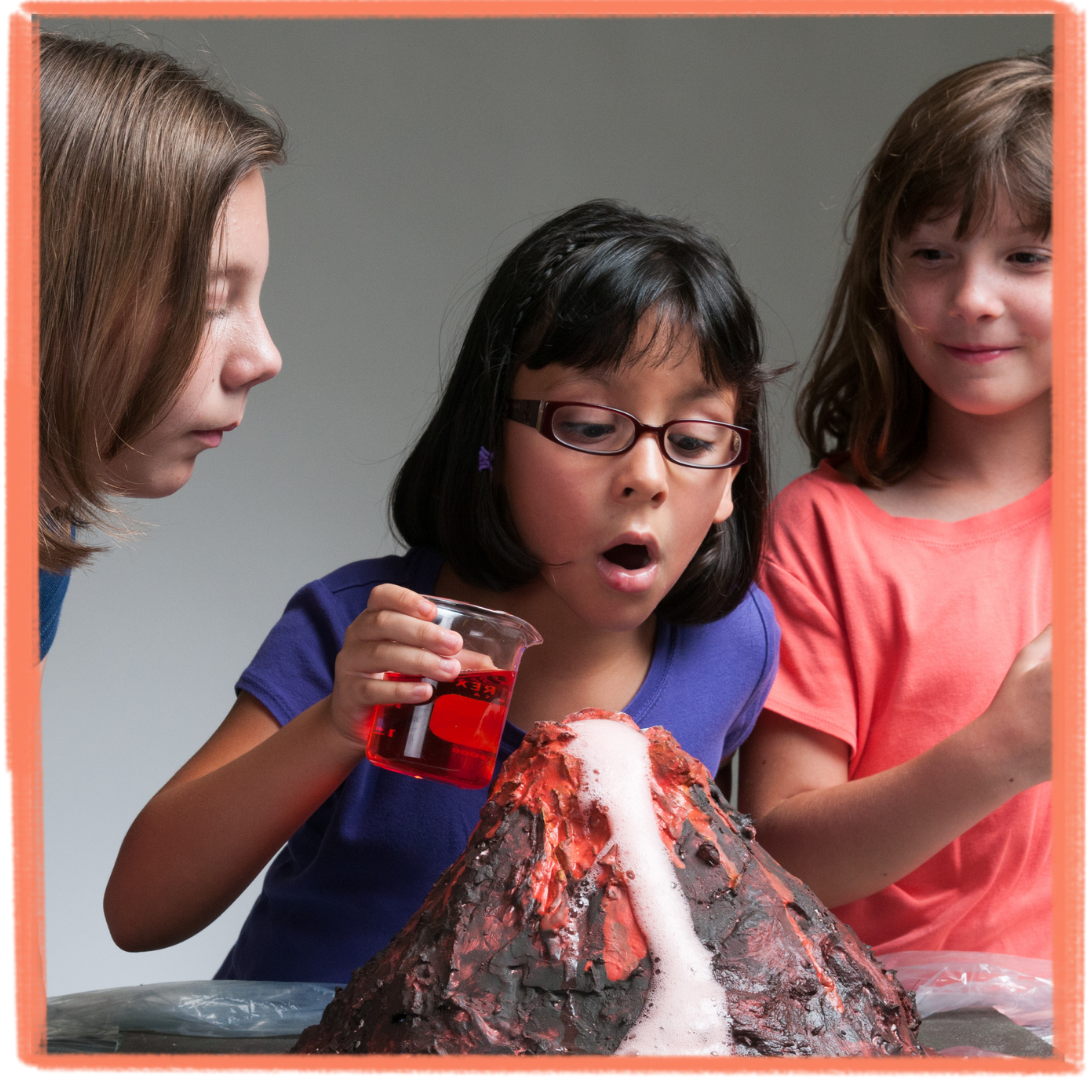
The Science Behind the Test
This is an introduction to chemical reactions, where substances combine to form something new with different properties. When baking soda (a base) and vinegar (an acid) mix, they create a chemical reaction that produces carbon dioxide gas. The bubbles you see are that gas escaping.
The dramatic eruption is a two-step chemical reaction:
Acid-Base Reaction: Baking soda is an alkaline base and vinegar is a weak acetic acid. When mixed, they exchange atoms and instantly create carbonic acid, which is highly unstable.
Decomposition: The unstable carbonic acid immediately breaks down into water and carbon dioxide gas.
The carbon dioxide gas expands rapidly, building up pressure inside the container. As the gas rushes to escape the opening, it mixes with the liquid dish soap to trap thousands of tiny bubbles, forming a spectacular, creeping foam that mimics real volcanic lava.

Extend the Learning:
Younger children:
Ask “What do you think will happen next?”
Talk about what they see, hear, and feel.
Older children:
Ask “Can you change the reaction by adjusting the amounts?”
Try different ratios and compare results.
Discuss what happens when reactions are stronger or weaker.

Challenge Idea:
Can you create the biggest or longest-lasting eruption using different ratios?