Backyard Science: Walking Water Experiment
Welcome back to Backyard Science Activities!
A series designed to help families explore simple science using everyday items at home.
This simple experiment demonstrates how water can “travel” through paper using a process called capillary action.
What You’ll Need:
3, 5 or 7 clear cups or the same height (depending on how many different colours you want to make)
Paper towel strips
Water
Food colouring (red, yellow, blue work best)
What to Do:
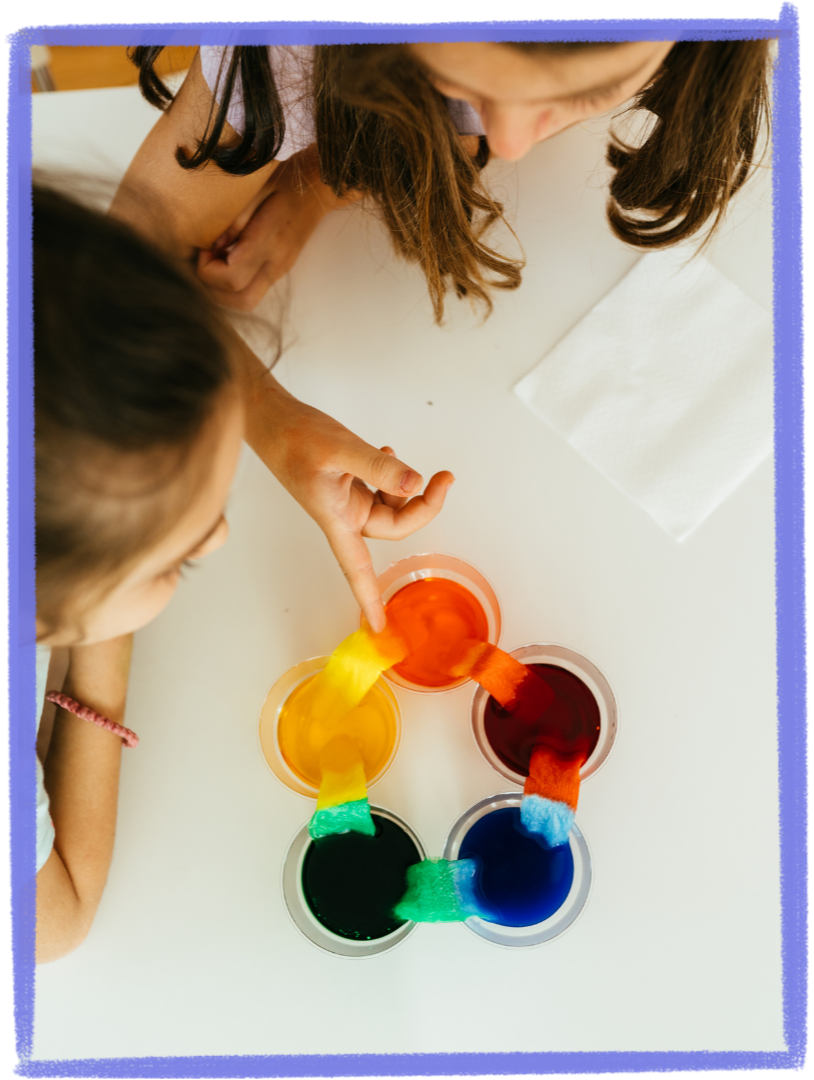
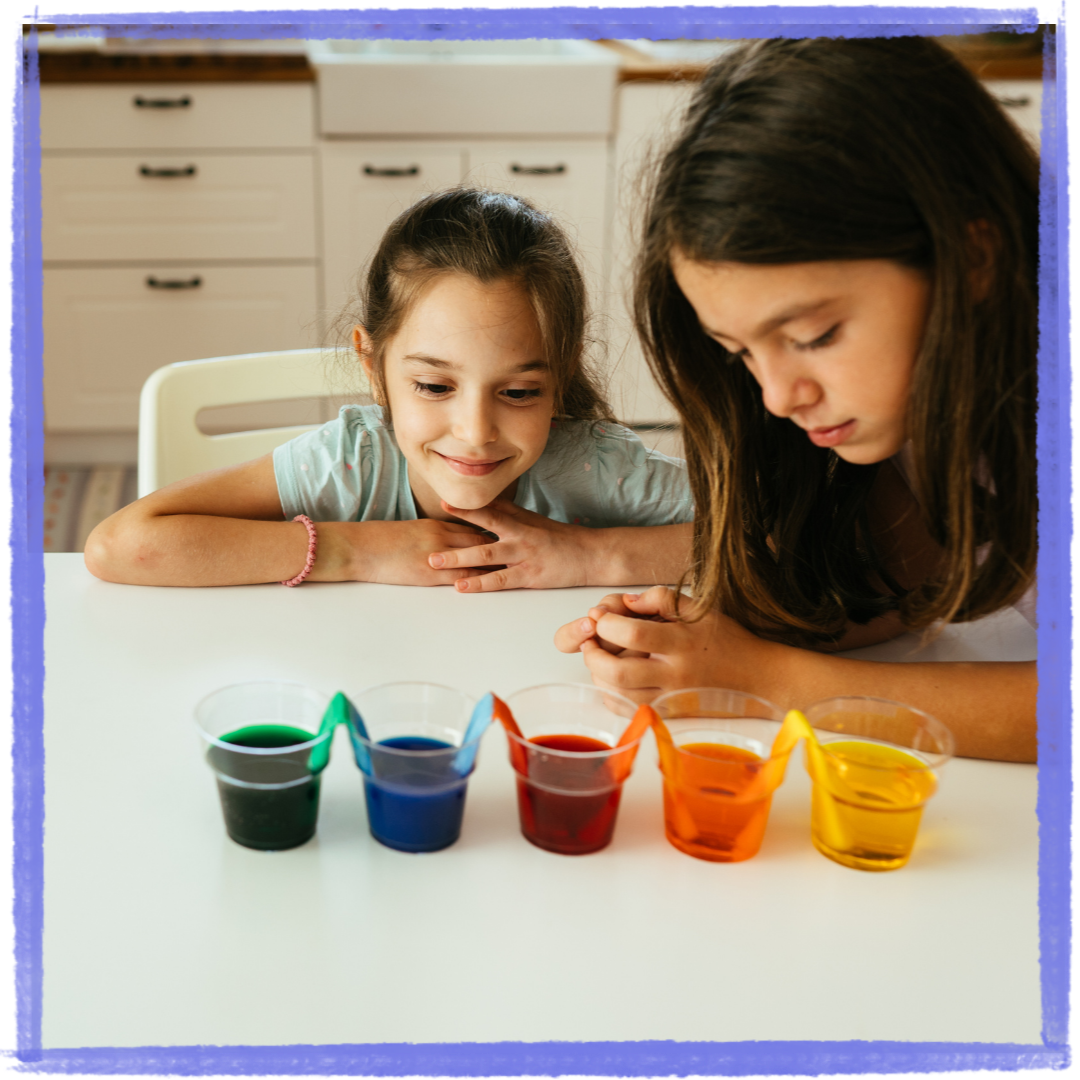
Place the cups in a line or circle pattern
Fill cup 1, 3, 5 and 7 about three-quarters full of water (leave glasses 2, 4, and 6 completely empty).
Add different food colouring to each filled cup.
a) Glass 1: 5–6 drops of Red
b) Glass 3: 5–6 drops of Yellow
c) Glass 5: 5–6 drops of Blue
d) Glass 7: 5–6 drops of Red
Place paper towel strips connecting the cups so that one end of a paper towel strip is in a glass with water and the other end is in an empty glass (making a paper towel bridge).
Wait and observe what happens over time (this may take a few hours).
The Science Behind the Test
This demonstrates capillary action, the movement of liquids through small spaces without the help of gravity alone. It’s the same way plants pull water up from their roots to their leaves. It involves three forces working together:
Adhesion: Water molecules like to cling to other materials, like the fibers in the paper towel.
Cohesion: Water molecules like to stick together, so as one droplet is pulled along, it brings other water molecules with it.
Surface Tension: The "skin" on the water's surface helps pull the liquid forward as it moves through the tiny gaps in the paper towel
Simply put, water moves through the paper towel fibres and “walks” into the empty cups, mixing colours along the way.

Extend the Learning:
Younger children:
Ask “What do you think will happen to the colours?”
Watch and describe the colour changes.
Older children:
Ask “Why do you think the water moves through the paper?”
Predict what new colours will form.
Compare how quickly colours travel.
Challenge Idea:
Can you create a full rainbow using only primary colours?