Classic Australian Books Every Child Should Discover
Australia has a wonderful literary tradition filled with stories that celebrate our landscapes, wildlife, humour, history, and uniquely Australian characters.
Some Australian children's books have been entertaining generations of readers for decades. They may have been written years ago, but their stories continue to find new audiences because they capture something timeless about childhood: curiosity, adventure, friendship, imagination, and a sense of wonder. Book Week is the perfect opportunity to revisit some of these classics, or introduce them to a new generation of readers.
Here are some much-loved Australian books that deserve a place on every family's reading list, including picture books for younger readers and chapter books for older children.
Possum Magic – Mem Fox
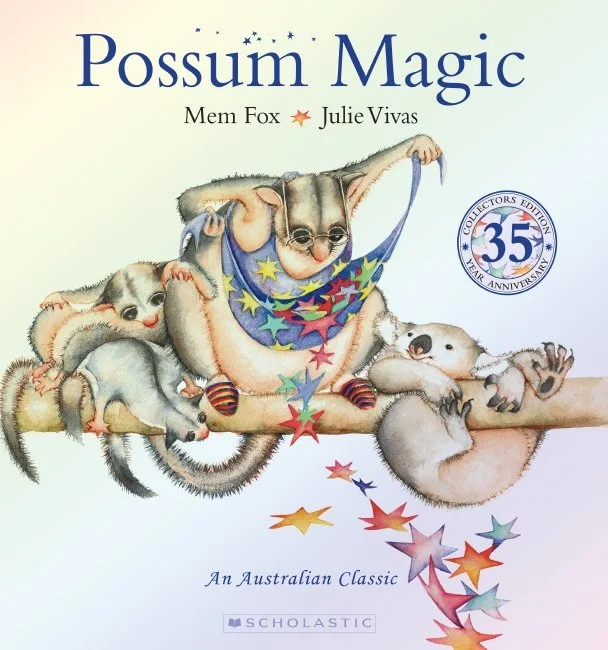
Few Australian children's books are as recognisable as Possum Magic.
Written by Mem Fox and illustrated by Julie Vivas, this beloved story follows Grandma Poss and her granddaughter Hush as they travel across Australia searching for a way to make Hush visible again. Their journey takes them through some of Australia's most recognisable places and introduces children to foods and experiences from different parts of the country.
Why We Love It
Possum Magic is a wonderful combination of storytelling, Australian culture, humour, and adventure.
As you read, you can explore:
Australian landmarks and cities
Australian animals
Australian foods
Friendship and family
Problem-solving
Australian vocabulary and culture
Try This at Home
After reading the story, choose a few Australian places mentioned in the book and find them on a map.
You could also ask:
"If you were travelling around Australia looking for a magical solution, where would you go?"
Children could draw their own Australian adventure and decide which foods, places, and animals they would encounter along the way.
Wombat Stew – Marcia Vaughan
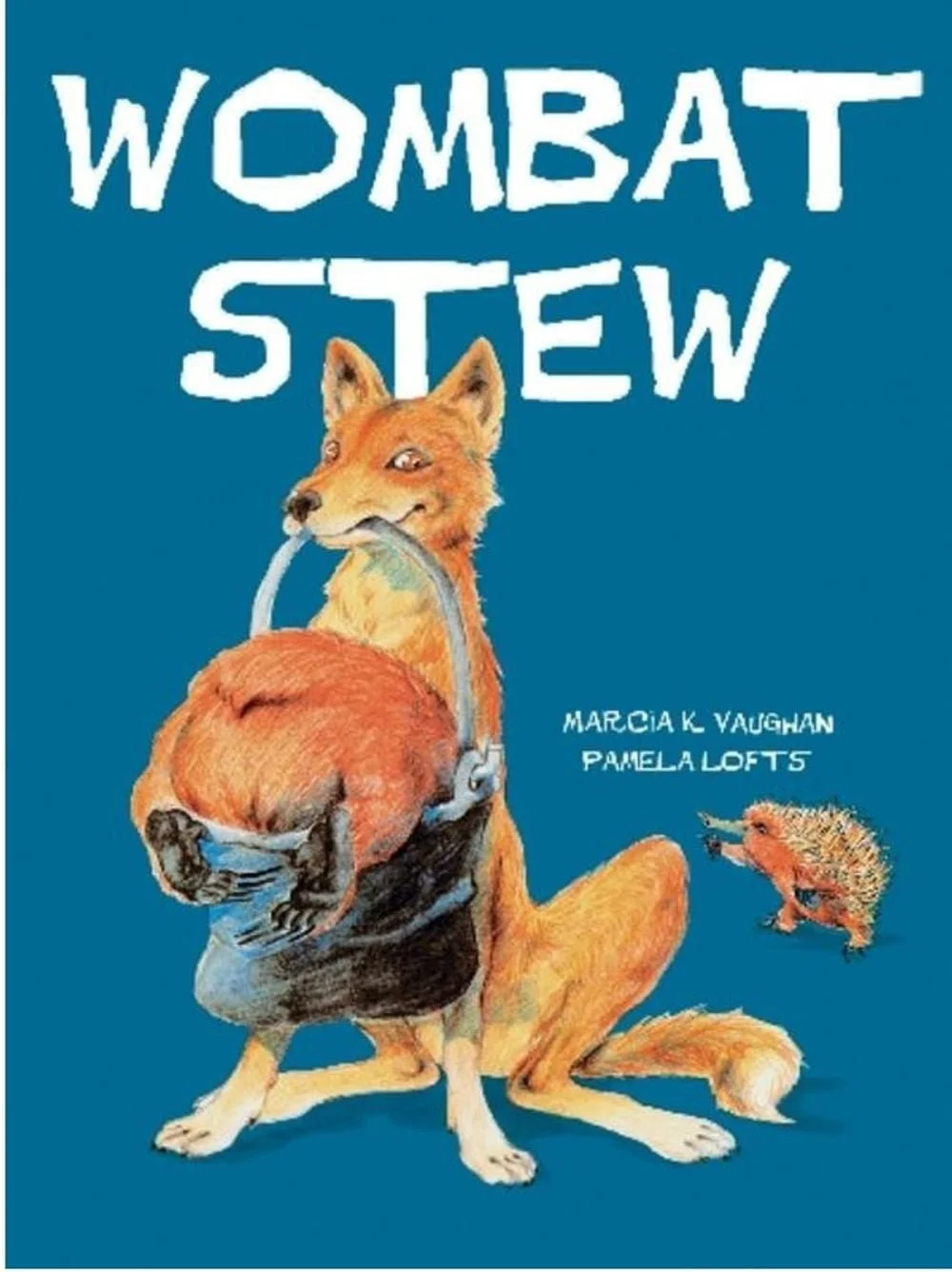
"Wombat stew! Wombat stew! Gooey, chewy, yummy, yummy, wombat stew!"
Wombat Stew, written by Marcia Vaughan and illustrated by Pamela Lofts, is a playful Australian story that has been enjoyed by generations of children. When a dingo catches a wombat and decides to make him into stew, the clever bush animals work together to outsmart him. One by one, they suggest adding unexpected ingredients, including mud, feathers, and flies!
Why We Love It
The repetitive structure and catchy language make this a fantastic story for reading aloud, particularly for younger children.
It provides opportunities to explore:
Rhyming and repetition
Predicting what happens next
Australian animals
Story sequencing
Problem-solving
Humour and wordplay
Try This at Home
Create your own silly "stew" together!
Choose an animal and invent a completely ridiculous recipe using ingredients you might find around the house or backyard.
For example:
"Platypus soup! Platypus soup! Crunchy, munchy, very silly soup!"
What ingredients would your child add?
This can become a wonderful creative writing or storytelling activity for older children, too.
The Complete Adventures of Snugglepot and Cuddlepie – May Gibbs
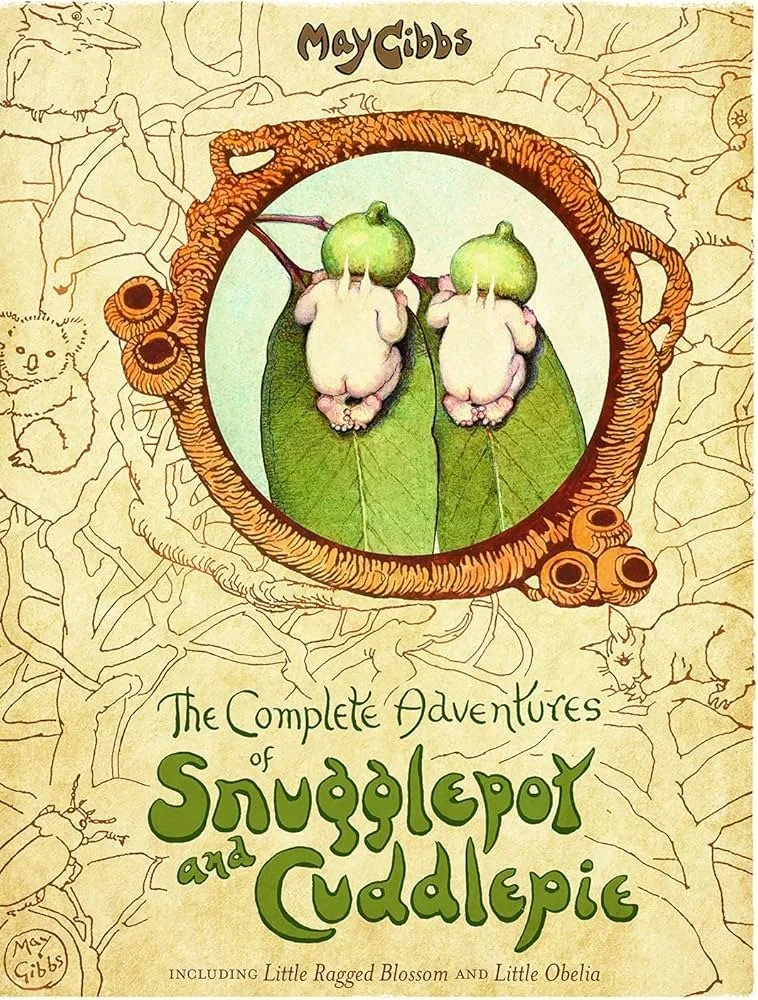
Long before many of today's favourite Australian children's characters came along, May Gibbs introduced readers to the magical world of the Australian bush.
The Complete Adventures of Snugglepot and Cuddlepie brings together the adventures of the famous gumnut babies, Snugglepot and Cuddlepie, as they explore a magical bush world filled with fascinating characters. First published in the early 20th century, the stories have become an important part of Australian children's literature.
Why We Love It
May Gibbs' stories offer children a wonderful opportunity to see the Australian bush through an imaginative lens.
The books encourage children to think about:
Australian plants and wildlife
Nature and the environment
Imagination and fantasy
Character development
Storytelling
Australian literary history
Try This at Home
Go outside and look closely at the plants around you.
What characters could live among the leaves, flowers, bark, and branches?
Ask your child to invent their own Australian bush character.
What would they look like? Where would they live? What would they eat? Who would their friends be?
They could draw their character and write a short story about their first adventure.
Diary of a Wombat – Jackie French
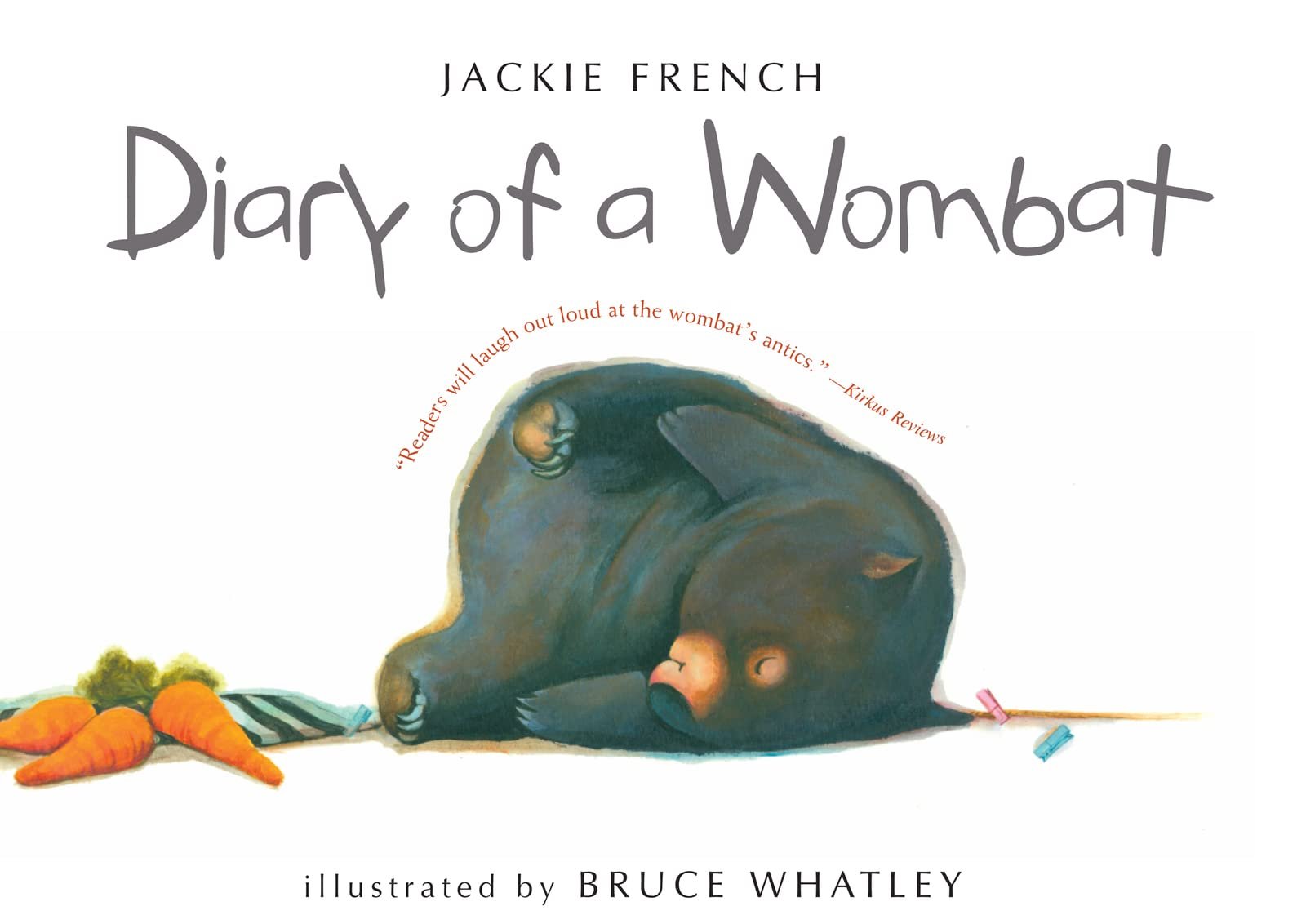
What does a wombat do all day?
According to the delightfully humorous Diary of a Wombat by Jackie French and illustrated by Bruce Whatley, the answer involves plenty of eating, digging, sleeping, and demanding carrots!
Told from the perspective of a very determined wombat, the story gives readers a funny glimpse into the daily life of one of Australia's most iconic animals.
Why We Love It
The book's humour makes it particularly engaging for young readers, while the diary format provides a great introduction to a different style of storytelling.
It can help children explore:
Australian wildlife
Animal behaviour
Diary writing
First-person storytelling
Sequencing events
Humour
Observation
Try This at Home
Create a "Day in the Life" diary from the perspective of an animal.
It could be:
A family pet
A bird in the backyard
An ant
A koala
A kangaroo
Even a fictional creature
What would the animal see? What would it eat? Where would it go? What would it think about?
For an extra challenge, write the diary for an entire week and see how the animal's adventures develop.

Chapter Books for Older Readers
As children grow into more confident readers, Australian literature offers rich, engaging chapter books that explore deeper themes while still celebrating imagination, humour, and place.
Here are three iconic Australian novels for older readers:
The Magic Pudding – Norman Lindsay
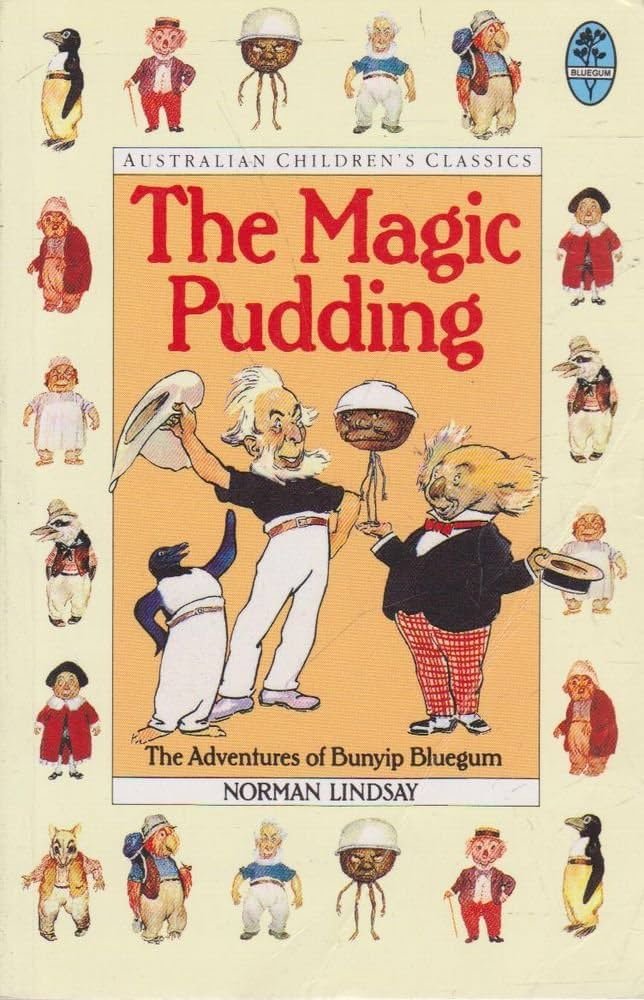
First published in 1918, The Magic Pudding is one of Australia's most famously eccentric and enduring children's novels.
It tells the story of Albert, a magical "cut-and-come-again" pudding who can never be eaten up. Albert travels with his companions through a series of absurd and hilarious adventures, constantly pursued by pudding thieves.
Why We Love It
This wonderfully strange book is full of humour, wordplay, and unforgettable characters.
It introduces readers to:
Classic Australian humour
Fantasy and absurd storytelling
Character-driven adventure
Early Australian literature
Creative language and imagination
Try This at Home
Invent your own magical food that never runs out.
What is it? What does it do? Who would try to steal it?
Write a short adventure story featuring your creation.
Storm Boy – Colin Thiele
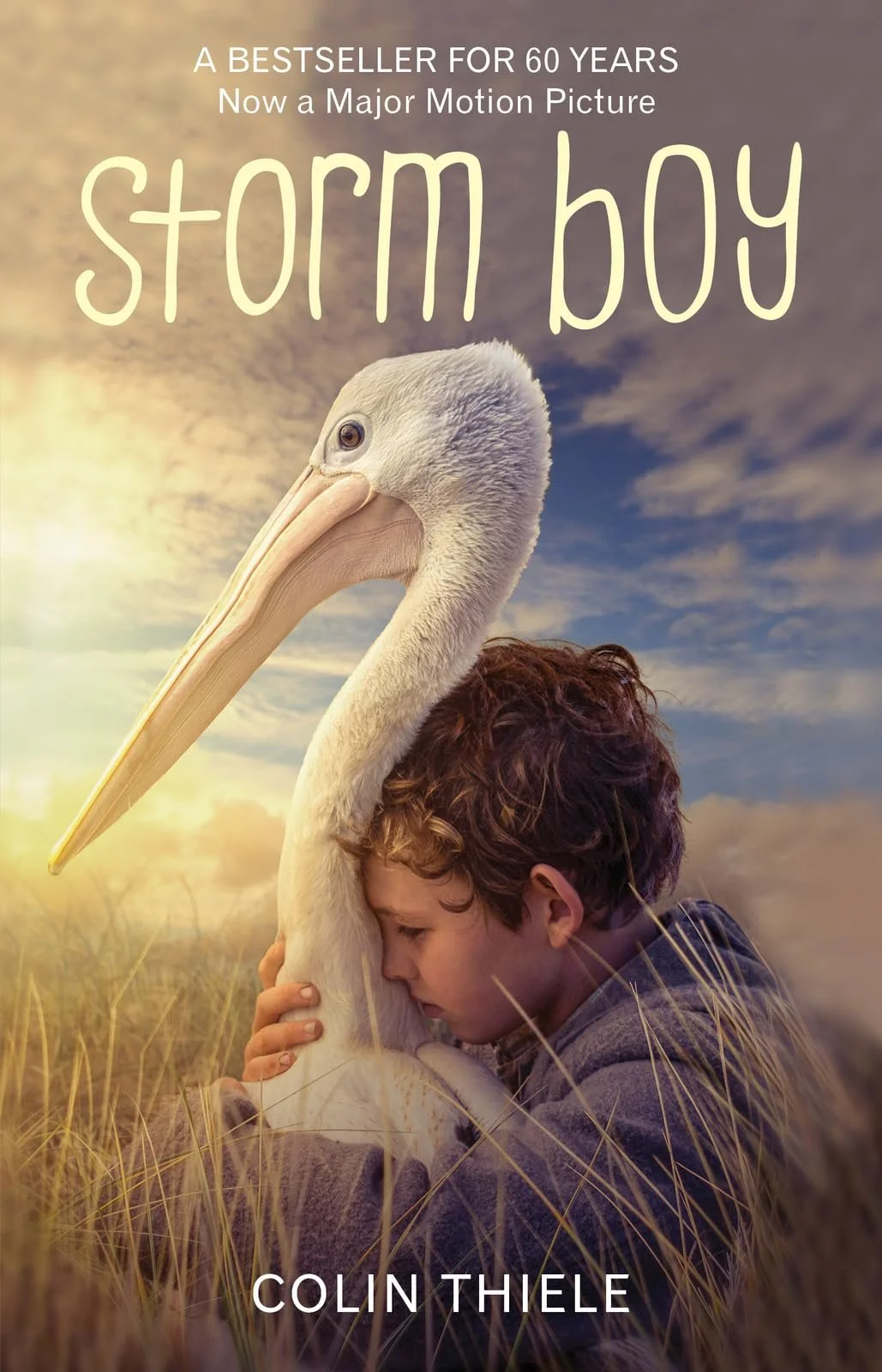
Storm Boy is a moving and beautifully written coastal story set in the Coorong in South Australia.
It follows a young boy who lives a solitary life with his father and forms a deep bond with an orphaned pelican named Mr Percival. Together, they experience the beauty and challenges of life along the wild coastline.
Why We Love It
This classic novel explores powerful emotional themes while celebrating the natural world.
It encourages readers to think about:
Friendship and loyalty
Nature and conservation
Growing up and responsibility
Australian coastal environments
Emotional storytelling
Try This at Home
Research pelicans or other coastal birds found in Australia.
Discuss:
"What does it mean to care for an animal in the wild?"
Older readers could write a reflective journal entry from the perspective of Storm Boy or Mr Percival.
My Place – Nadia Wheatley & Donna Rawlins
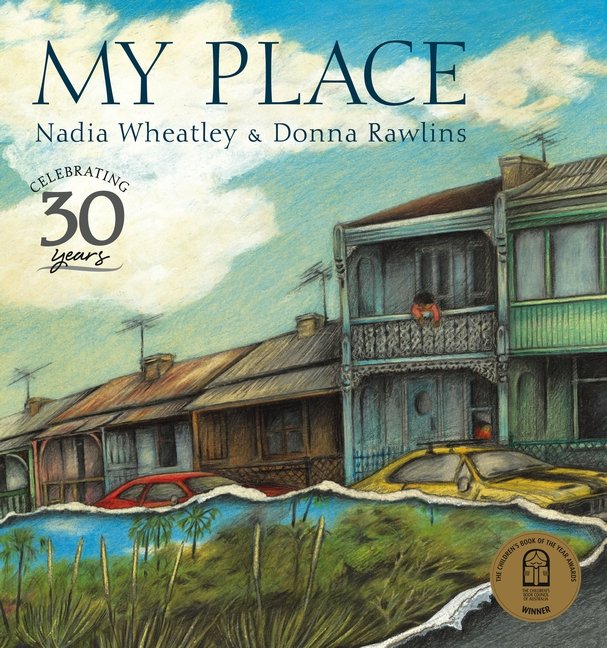
My Place is a ground-breaking illustrated history book that traces the same patch of land in Sydney backwards through time, from 1988 all the way to 1788. Each chapter introduces a different child living in the same place at a different moment in history, revealing how the land and its people have changed over time.
Why We Love It
This powerful book blends storytelling with Australian history in a unique and accessible way.
It helps readers explore:
Australian history and colonisation
Change over time
Indigenous and settler perspectives
Place and identity
Historical storytelling
Social understanding
Try This at Home
Choose a place that is important to you—your home, school, or local park.
Research or imagine what it might have looked like:
10 years ago
50 years ago
100 years ago
Create a timeline or illustrated story showing how it has changed.
Why Read Australian Children's Books?
Australian children's literature gives young readers the opportunity to see familiar places, animals, environments, and experiences reflected in the stories they read. It can also introduce children to Australian authors and illustrators while helping them develop an appreciation for the country's literary and cultural heritage.
Books such as Possum Magic, Wombat Stew, The Complete Adventures of Snugglepot and Cuddlepie, and Diary of a Wombat each offer something different, but they all demonstrate how Australian stories can be imaginative, funny, memorable, and meaningful. For older readers, novels like The Magic Pudding, Storm Boy, and My Place deepen this experience by exploring humour, emotion, and history in powerful ways.
Turn Reading Into an Adventure
You don't need to simply read these books and put them back on the shelf. Use them as a starting point for further exploration.
After reading an Australian classic, you could:
Look up the animals featured in the story
Find the locations mentioned on a map
Learn about Australian plants
Cook or taste foods connected to the story
Create artwork inspired by the illustrations
Write your own Australian bush story
Invent a new character
Act out a favourite scene
Visit your local library to discover more Australian authors
A single book can become the starting point for an entire afternoon of learning.
Let's Recap
Classic Australian children's books are more than stories from the past. They are part of a rich literary tradition that continues to introduce children to Australian landscapes, wildlife, humour, imagination, and culture. Whether you're discovering Grandma Poss and Hush for the first time, singing along with Wombat Stew, entering May Gibbs' magical bush world, laughing at the antics of a carrot-loving wombat, or exploring deeper stories like Storm Boy and My Place, these books offer something for every age and stage of reading.
So this Book Week, why not choose an Australian classic, curl up together, and discover (or rediscover) a little piece of Australian storytelling? After all, some stories are classics for a reason.